
We’ve all heard the phrase “content is king.” For years, successful marketing and public communication often felt like a numbers game: publish more, post more frequently, expand to more platforms. Visibility was the goal, and scale was the strategy.
Now that framework is shifting. As we move through 2026, the conversation is less about volume and more about credibility. Audiences are no longer asking only whether information is available; they’re asking whether it can be trusted.
We have more access to information than ever before, yet confidence feels harder to secure. Images and videos can be generated in seconds, and convincingly altered. Published articles can be discreetly edited at any time. Streaming libraries are constantly adding and dropping titles. Even long-standing public institutions are adjusting what they release and how often.
These inconsistencies add up. It gets harder and harder to know what will hold. The post you liked yesterday may be difficult to find today. A link that works now may not tomorrow. Statements, reports, survey results – can all be endlessly edited and updated, leaving no trace. This mutability erodes trust.
Doubt Becomes Default
A recent Forbes piece put it plainly: social media is entering a new era, one that demands credibility, clarity, and authenticity. After an overload of bots and AI “slop,” skepticism is the natural response. As a result, people are pulling back, and becoming harder than ever to reach.
The good news is, the remedy’s right here in black and white: print. As we grow wary of digital sources, physical media offers unique value for their permanence and reliability.
Printing fixes our words and images on the page. A newsletter, dispatch, or announcement cannot be edited after it lands in someone’s mailbox. It cannot be revised or removed because a hosting agreement expired or the Board decided to rebrand.
Proof That Persists
This indelibility creates a record that can be referenced, saved, compared, and depended upon. To see something in print, is to know a good deal of work – and likely a team of professionals – was involved to write, proofread, layout, and publish it. Of all media formats, print by nature requires strong oversight with built-in checkpoints.
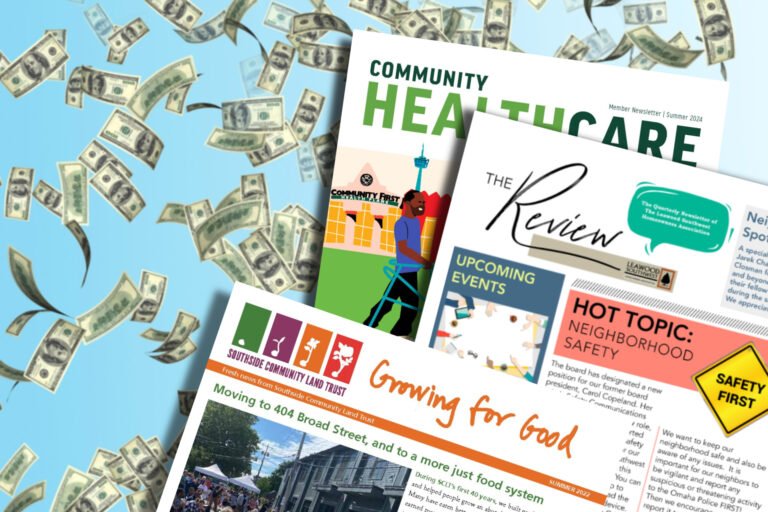
For public agencies and municipalities, this is huge, as local governments operate on trust. Residents need to believe that zoning updates, tax notices, public health guidance, and budget explanations are valid and complete. When those communications exist in print, they signal transparency and accountability. They reflect an investment of time and money.
Not to hate on digital channels – they’re indispensable in their own way. They’re great for speed, affordability, and responsiveness. But they rely on systems that can change the rules at any time.
New algorithms can throw off your traffic. Moderation policies change. Engagement patterns fluctuate. Even well-intentioned posts can get lost in crowded feeds or buried beneath unrelated content. Digital communication is dynamic by nature. Print, by contrast, is inherently stable.
Safe and Sound
There is also the question of privacy. Most people understand these days that online activity leaves behind digital footprints. Ads follow users across sites, while data brokers trade our information with marketers, retailers, government entities – whoever cares to ID us and track our behavior. The experience can feel invasive.
Not so with printed materials. Browsing a newsletter at a kitchen table does not generate analytics. No one is recording which articles you flip past versus the ones you linger over. No flags or public records auto-generate. With print, the information flows one direction: toward the reader, whose personal details and preferences remain unknown.
That security is especially key for a host of topics: household income, real estate assessments, school policies, spending habits, and even political leanings. Reading something without leaving digital evidence behind just feels safer. And there’s added peace of mind, as well.
Nothing feels as official as paperwork in your hands. Property deeds, passports, signed agreements, marriage certificates — for real legitimacy, we want to see the words on the page. A tangible document is the gold standard for legitimacy, as it can’t be altered without trace. Digital records alone don’t cut it.
This holds true for documents as well as basic communication. When residents seek clarity from local and organizational leadership, they don’t want fast answers. They need accuracy. They need an explanation that exists outside a scrolling feed. Something to read at their own pace, and come back to for reference.
Print does more than inform, it establishes a public record. An annual report becomes part of the institutional memory of a town. A mailed notice carries weight precisely because it required intention — design, printing, distribution. It signals that the message was important enough to fix in place. And because print can’t be edited later, more care goes into getting it right the first time.
Full Circle
There’s a satisfying symmetry here. The printing press was the first technology to spread information at scale, accelerating public discourse, shaping civic life, and laying the foundation for modern media. As digital platforms grow more diffuse and unchecked today, that same medium now slows that pace and steadies it.
The industry that once expanded the reach of ideas now helps to restore their weight. And as best practices shift from quantity to credibility, print stands ready as a foundation for community trust.
This blog is powered by East Falls Media, where we help small businesses, nonprofits, and local governments communicate with clarity and purpose.